
From Chatbots to Voice AI: A UX Design Framework
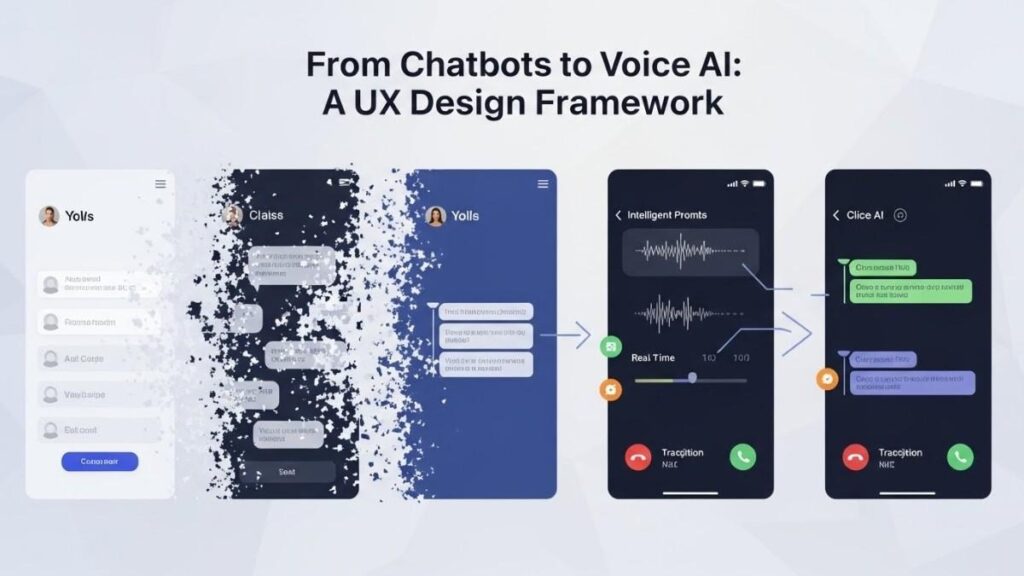
Introduction
Table of Contents
TL;DR The digital landscape has shifted dramatically over the past decade. Text-based chatbots once dominated customer service platforms. Voice AI now emerges as the next frontier in human-computer interaction. This evolution demands a fresh approach to creating meaningful user experiences. A robust conversational UX design framework helps designers navigate this complex terrain. Your users expect natural, intuitive interactions regardless of the interface. Meeting these expectations requires understanding both the technical capabilities and human psychology behind voice interfaces.
Understanding the Evolution from Text to Voice
The Rise of Chatbots in Digital Experiences
Chatbots appeared as simple rule-based systems in the early 2010s. Companies deployed them to handle basic customer inquiries. These early systems followed decision trees with limited flexibility. Users typed questions and received predetermined responses. The experience felt mechanical and frustrating at times. Machine learning changed everything by introducing natural language processing capabilities. Chatbots began understanding context and intent rather than just matching keywords. This advancement made conversations feel more human and less scripted.
Why Voice AI Represents the Next Leap
Voice interfaces eliminate the friction of typing on small screens. People speak three times faster than they type on average. Voice AI captures the nuances of human speech including tone, emotion, and urgency. Smart speakers entered millions of homes and normalized voice commands for everyday tasks. Mobile devices integrated voice assistants that users access with simple wake words. The technology matured enough to handle complex queries and multi-turn conversations. Voice AI now powers everything from automotive systems to healthcare applications. The conversational UX design framework must accommodate these diverse use cases and contexts.
Key Differences Between Text and Voice Interactions
Text-based interfaces provide a visual history of the conversation. Users can scroll back and review previous messages at their leisure. Voice interactions happen in real-time without visual artifacts. Memory becomes crucial because users cannot reference what was said moments ago. Text allows users to edit their input before sending a message. Voice requires systems to handle hesitations, corrections, and fragmented speech patterns. Visual interfaces display multiple options simultaneously through buttons or menus. Voice must present choices sequentially, which changes information architecture fundamentally. These differences shape how designers approach the conversational UX design framework for each modality.
Building Blocks of a Conversational UX Design Framework
User Research Specific to Voice Interfaces
Understanding your audience forms the foundation of any design process. Voice interfaces require specialized research methods beyond standard usability testing. Conduct contextual inquiries to observe where and when users might employ voice commands. Interview participants about their comfort level with speaking to devices in public versus private settings. Create voice-specific personas that capture speech patterns, accents, and vocabulary preferences. Test with diverse user groups to identify potential biases in speech recognition. Document the environmental conditions where users will interact with your voice AI. Background noise, echo, and distance from the device all impact the experience. Your conversational UX design framework should incorporate these findings from the earliest stages.
Defining Conversation Flows and Dialog Management
Mapping conversation flows differs significantly from designing screen transitions. Start by identifying the primary user intents your voice AI must handle. Break down complex tasks into smaller, manageable dialog turns. Design for both happy paths and potential detours or error scenarios. Consider how the system will maintain context across multiple exchanges. Plan for interruptions where users might change topics mid-conversation. Your conversational UX design framework needs clear rules for when to ask clarifying questions. Balance thoroughness with efficiency to avoid frustrating users with excessive back-and-forth. Document state management to ensure the system remembers relevant information throughout the session.
Personality and Tone Development
Voice AI requires a distinct personality that aligns with your brand values. Decide whether your assistant should sound formal, friendly, playful, or professional. Create character guidelines that define vocabulary choices and sentence structures. Establish rules for humor, empathy, and emotional responsiveness. The personality must remain consistent across different scenarios and user moods. Write sample dialogs that demonstrate the voice and tone in various contexts. Test these samples with target users to gauge their reactions and comfort levels. A well-defined personality makes your conversational UX design framework more cohesive and memorable.
Error Handling and Recovery Strategies
Voice recognition fails occasionally due to accents, background noise, or unclear speech. Your framework must anticipate these failures and handle them gracefully. Design error messages that feel helpful rather than accusatory. Offer users multiple paths to correct misunderstandings or provide missing information. Implement progressive disclosure where the system reveals more details if confusion persists. Create fallback options that allow users to switch modalities when voice proves inadequate. Track common failure points to improve the system iteratively. Error recovery capabilities separate frustrating experiences from delightful ones. The conversational UX design framework should treat errors as expected events rather than exceptional cases.
Designing Natural Voice Interactions
Principles of Natural Language Understanding
Humans speak in fragments, run-on sentences, and colloquial expressions. Your voice AI must parse this messy input and extract meaningful intent. Design your system to recognize synonyms and varied phrasings for the same request. Account for cultural differences in how people express politeness or urgency. Build tolerance for filler words like “um,” “uh,” and “you know.” Train your natural language understanding models on real user utterances rather than idealized scripts. The conversational UX design framework guides how loosely or strictly the system interprets user input. Finding the right balance prevents both false positives and frustrating rejections.
Crafting Prompts That Guide Without Constraining
Voice prompts must be clear yet open-ended enough to feel natural. Avoid lengthy instructions that users will forget before they finish speaking. Front-load the most important information in your prompts. Use concrete examples to illustrate what users should say. Design prompts that work whether users provide minimal or exhaustive information. Test prompt effectiveness by measuring task completion rates and user satisfaction. Iterate based on actual user responses rather than assumptions. Your conversational UX design framework should include guidelines for prompt length, complexity, and specificity.
Handling Multi-Turn Conversations
Complex tasks require multiple exchanges between user and system. Design these conversations to feel coherent rather than like a series of isolated questions. Maintain context from earlier turns to avoid asking for redundant information. Signal progress through the task so users understand how much remains. Allow users to jump ahead or revisit previous steps as needed. Design confirmation patterns that verify critical information without feeling tedious. The system should gracefully handle digressions and return to the main task flow. Multi-turn conversations reveal whether your conversational UX design framework can handle complexity.
Managing User Expectations
Voice AI has limitations that users must understand to avoid disappointment. Set clear expectations about what the system can and cannot do during onboarding. Use explicit signaling when the system reaches the boundaries of its capabilities. Avoid promising features that exist only in future development plans. Design transparent interactions where users understand how their data gets processed. Provide alternative channels when voice cannot adequately address user needs. Managing expectations prevents frustration and builds trust in the system. The conversational UX design framework should address expectation-setting at multiple touchpoints.
Technical Considerations for Voice AI Implementation
Speech Recognition Accuracy and Optimization
Accurate speech recognition forms the backbone of any voice AI system. Choose recognition engines based on your target languages and accents. Fine-tune models with domain-specific vocabulary relevant to your use case. Implement noise cancellation techniques to improve performance in suboptimal conditions. Test recognition accuracy across diverse speaker demographics. Monitor real-world performance and continuously retrain models with actual usage data. The conversational UX design framework must account for recognition limitations in the design itself.
Text-to-Speech Quality and Voice Selection
Synthetic voices have improved dramatically but still require careful selection. Choose voices that match your brand personality and user preferences. Test different voices with target users to gather feedback on naturalness and clarity. Adjust speech rate, pitch, and pauses to enhance comprehension. Consider offering voice options so users can personalize their experience. Balance expressiveness with clarity to ensure critical information gets understood. High-quality text-to-speech enhances the overall experience within your conversational UX design framework.
Latency and Response Time Management
Users expect near-instantaneous responses in voice interactions. Optimize your system architecture to minimize processing delays. Provide audio feedback like acknowledgment sounds when processing takes longer. Design graceful degradation when network conditions slow response times. Test performance under various load conditions and network speeds. Set clear service level objectives for response latency. Fast responses make conversations feel natural and maintain user engagement. The conversational UX design framework should specify acceptable latency thresholds.
Privacy and Security by Design
Voice interactions often involve sensitive personal information. Implement robust encryption for all voice data in transit and at rest. Provide clear privacy policies that users can access through voice commands. Design optional authentication methods that balance security with convenience. Allow users to review and delete their voice interaction history. Implement local processing where possible to minimize data transmission. Build trust through transparent data practices embedded in your conversational UX design framework.
Creating Seamless Multimodal Experiences
When to Use Voice Versus Visual Elements
Not every interaction benefits from voice-only design. Complex data visualization requires visual displays for effective comprehension. Long lists or tables work better on screens than spoken sequentially. Voice excels for hands-free operation, quick queries, and accessibility needs. Design hybrid experiences that leverage both modalities strategically. Allow users to initiate tasks with voice and view results on screens. Your conversational UX design framework should guide modality selection based on task requirements.
Designing Companion Visual Interfaces
Visual companions enhance voice experiences by providing confirmations and context. Display transcriptions of what the system heard to catch recognition errors early. Show response options visually while announcing them verbally. Provide supplementary information on screens without interrupting the voice flow. Design visual elements that enhance rather than duplicate the voice interaction. Maintain visual continuity across different devices in your ecosystem. The conversational UX design framework coordinates how voice and visual elements work together.
Handoff Strategies Between Channels
Users often switch between devices and modalities mid-task. Design seamless handoff mechanisms that preserve conversation context. Allow users to start a task on a smart speaker and continue on a mobile app. Implement state synchronization across devices without requiring explicit user action. Provide clear indicators when handoff options are available. Test handoff scenarios thoroughly to ensure smooth transitions. Channel switching capabilities extend the utility of your conversational UX design framework.
Accessibility Considerations
Voice interfaces can dramatically improve accessibility for users with various disabilities. Design for screen reader compatibility even in voice-first applications. Provide alternative input methods for users who cannot speak. Ensure visual companions meet WCAG guidelines for those who rely on them. Test with users who have disabilities to identify unexpected barriers. Consider cognitive load and design simpler flows for users who need them. Accessibility should be central to every conversational UX design framework rather than an afterthought.
Testing and Iterating Voice Experiences
Usability Testing Methods for Voice AI
Traditional usability testing methods need adaptation for voice interfaces. Conduct Wizard of Oz testing early when the system is not fully functional. Use think-aloud protocols carefully as they can interfere with natural speech patterns. Record sessions to capture exact utterances and system responses. Test in realistic environments that match actual usage contexts. Recruit diverse participants to identify recognition and comprehension issues. Measure both task completion and subjective satisfaction. Your conversational UX design framework evolves through systematic testing.
Analyzing Conversation Logs and User Utterances
Real usage data provides invaluable insights for improvement. Collect and analyze conversation logs to identify common failure patterns. Categorize user utterances to discover unexpected phrasings and intents. Measure conversation length and turn counts to assess efficiency. Identify abandonment points where users give up on tasks. Look for repeated attempts that indicate confusion or errors. Use this data to refine your natural language understanding and dialog flows. The conversational UX design framework becomes more robust with data-driven iteration.
A/B Testing Conversational Elements
Test different approaches to prompts, error messages, and conversation flows. Run A/B tests on voice personality traits to see what resonates with users. Compare different levels of verbosity in system responses. Test various confirmation patterns to balance thoroughness and efficiency. Measure the impact of changes on task completion and user satisfaction. Use statistical rigor to ensure results are significant and actionable. Continuous optimization strengthens your conversational UX design framework over time.
Gathering and Incorporating User Feedback
Direct feedback complements quantitative metrics in understanding user needs. Implement easy mechanisms for users to provide feedback during or after interactions. Conduct follow-up interviews with frequent users to understand their experience. Create feedback loops that inform design decisions and prioritization. Share findings across teams to build organization-wide voice AI expertise. Close the loop by communicating improvements back to users. User-centered iteration is fundamental to any successful conversational UX design framework.
Industry-Specific Applications and Considerations
Healthcare Voice AI Design
Healthcare applications demand exceptional accuracy and sensitivity. Design for medical terminology that general-purpose systems might misrecognize. Ensure strict HIPAA compliance in all data handling practices. Create empathetic responses appropriate for patients experiencing distress. Design clear escalation paths to human medical professionals when needed. Test with both patients and healthcare providers to meet diverse needs. The conversational UX design framework for healthcare must prioritize safety and privacy above all else.
Voice Commerce and Retail
Shopping through voice requires different information architecture than browsing visually. Design concise product descriptions that convey key features verbally. Implement smart filtering that narrows choices through conversation. Create secure payment flows that work through voice authentication. Handle price-sensitive information carefully to build trust. Design for impulse purchases as well as considered shopping journeys. Retail voice experiences need a conversational UX design framework focused on conversion and trust.
Automotive and In-Car Voice Systems
Driving contexts impose unique constraints on interaction design. Minimize cognitive load to keep driver attention on the road. Design for noisy environments with multiple passengers and road sounds. Create brief, scannable responses that drivers can process quickly. Implement voice-only paths for critical safety functions. Test in actual vehicles under realistic driving conditions. Automotive applications require a conversational UX design framework that prioritizes safety.
Smart Home and IoT Device Control
Voice has become the primary interface for smart home management. Design natural ways to refer to devices across different rooms and brands. Handle ambiguous commands like “turn off the lights” in spaces with multiple fixtures. Create routines that group multiple actions into single voice commands. Design for multiple household members with different preferences and permissions. Test across different smart home ecosystems and integration points. Smart home voice experiences benefit from a flexible conversational UX design framework.
Emerging Trends and Future Considerations
Emotional Intelligence in Voice AI
Future voice systems will detect and respond to user emotions. Design appropriate empathetic responses to frustration, confusion, or distress. Consider ethical implications of emotional detection and manipulation. Build user trust through transparent emotional AI practices. Test emotional responsiveness across diverse cultural contexts. The next generation of conversational UX design framework will incorporate emotional intelligence as a core component.
Personalization and Context Awareness
Voice AI increasingly adapts to individual user preferences and contexts. Design systems that learn from repeated interactions without explicit programming. Balance personalization with privacy concerns and user control. Create onboarding experiences that establish initial preferences. Allow users to correct the system when personalization goes wrong. Contextual awareness will become central to advanced conversational UX design framework implementations.
Ambient Computing and Always-On Voice
Voice interfaces are moving toward continuous availability and proactive assistance. Design wake-word-free experiences that respond to natural conversation. Handle background listening ethically with clear user controls. Create appropriate interruption strategies for proactive suggestions. Test ambient voice experiences in real living and working environments. The conversational UX design framework must evolve to address always-on scenarios.
Voice AI Ethics and Responsible Design
Designers bear responsibility for the societal impact of voice technologies. Address potential biases in speech recognition across demographics. Design transparent systems that explain their reasoning and capabilities. Create equitable experiences regardless of accent, speech patterns, or language fluency. Consider environmental impacts of always-listening devices. Build in safeguards against manipulation or deceptive practices. Ethical considerations should permeate every aspect of your conversational UX design framework.
Implementation Roadmap and Best Practices
Building Cross-Functional Teams
Successful voice AI requires collaboration across multiple disciplines. Include conversation designers, voice technologists, linguists, and traditional UX designers. Add audio designers who can craft the sonic brand experience. Involve privacy and security experts from the project inception. Ensure product managers understand the unique constraints of voice interfaces. Cross-functional teams implement a conversational UX design framework more effectively than siloed departments.
Prototyping and Development Tools
Numerous tools exist to accelerate voice AI development and testing. Use conversation design platforms that allow rapid prototyping without code. Leverage voice prototyping tools for creating interactive mockups. Implement analytics platforms designed specifically for conversational interfaces. Choose development frameworks that support your target platforms and languages. The right toolchain makes your conversational UX design framework easier to implement and test.
Documentation and Design Systems
Voice experiences need comprehensive documentation like any other design system. Create style guides that cover voice, tone, and personality consistently. Document dialog patterns and reusable components for common interactions. Maintain a lexicon of approved terminology and phrasings. Develop templates for common conversation types like onboarding or error recovery. Well-documented patterns scale your conversational UX design framework across teams and projects.
Measuring Success and ROI
Define clear metrics that demonstrate voice AI value to stakeholders. Track task completion rates and time-to-completion for key user journeys. Measure user satisfaction through post-interaction surveys and NPS scores. Monitor containment rates for customer service applications. Calculate cost savings from automation compared to human agents. Demonstrate improvements in accessibility and reach to new user segments. Quantifiable results justify continued investment in your conversational UX design framework.
Common Pitfalls and How to Avoid Them
Over-Reliance on Visual Interface Patterns
Designers often default to visual mental models when creating voice experiences. This approach leads to unnatural interactions that feel forced and mechanical. Resist the temptation to simply read menus aloud verbatim. Design conversation flows that leverage the strengths of voice rather than working around its constraints. Your conversational UX design framework should emphasize voice-first thinking from the start.
Insufficient Error Handling Planning
Many teams underestimate the frequency and variety of errors in voice interfaces. Recognition failures, misunderstood intents, and incomplete information happen regularly. Design robust error handling from the beginning rather than treating it as an edge case. Test error scenarios as thoroughly as happy paths. The conversational UX design framework must make error recovery a primary design consideration.
Ignoring Context and Environment
Voice interactions happen in diverse physical and social contexts. Designing for a quiet office misses users in noisy cafes or busy homes. Consider whether users will feel comfortable speaking certain information aloud. Test in realistic environments that match actual usage scenarios. Context awareness must be built into your conversational UX design framework.
Neglecting Conversation Design Expertise
Teams sometimes assume existing UX skills transfer directly to voice design. Conversation design requires specialized knowledge of linguistics, dialog systems, and voice technology. Hire or train dedicated conversation designers rather than expecting adaptation. Invest in ongoing education as the field continues to mature. Expert conversation designers ensure your conversational UX design framework follows best practices.
Read More:-Voice AI Ethics with Human Handoff Explained
Conclusion

Voice AI represents a paradigm shift in how humans interact with technology. The journey from simple chatbots to sophisticated voice interfaces demands a comprehensive design approach. A well-structured conversational UX design framework provides the foundation for creating exceptional voice experiences. This framework encompasses user research, conversation design, technical implementation, and continuous iteration. Success requires understanding both the capabilities and limitations of current voice technology. Teams must balance innovation with usability to create interactions that feel natural and effortless.
The future of voice AI holds exciting possibilities for more intuitive human-computer interaction. Emotional intelligence and contextual awareness will make systems more responsive to user needs. Ambient computing will integrate voice more seamlessly into our environments. Ethical design practices will ensure these powerful technologies serve all users equitably. Your conversational UX design framework must evolve alongside these technological advances.
Start by deeply understanding your users and the contexts where they will use voice. Build cross-functional teams that bring diverse expertise to the design process. Prototype early and test often with real users in realistic environments. Measure both quantitative metrics and qualitative feedback to guide iterations. Document patterns and best practices to scale your efforts across the organization.
Voice AI success comes from treating conversation design as a distinct discipline. The conversational UX design framework you build today will serve as the foundation for tomorrow’s innovations. Invest in the right tools, talent, and processes to create voice experiences that users love. The transition from chatbots to voice AI demands careful planning and execution. Organizations that embrace this shift with a solid framework will lead the next wave of digital experiences.